Plymouth Maritime History for Curious Children
Follow the story of Smeaton’s Tower being rebuilt on the Hoe, then discover how conservators investigated wooden naval figureheads.
Published
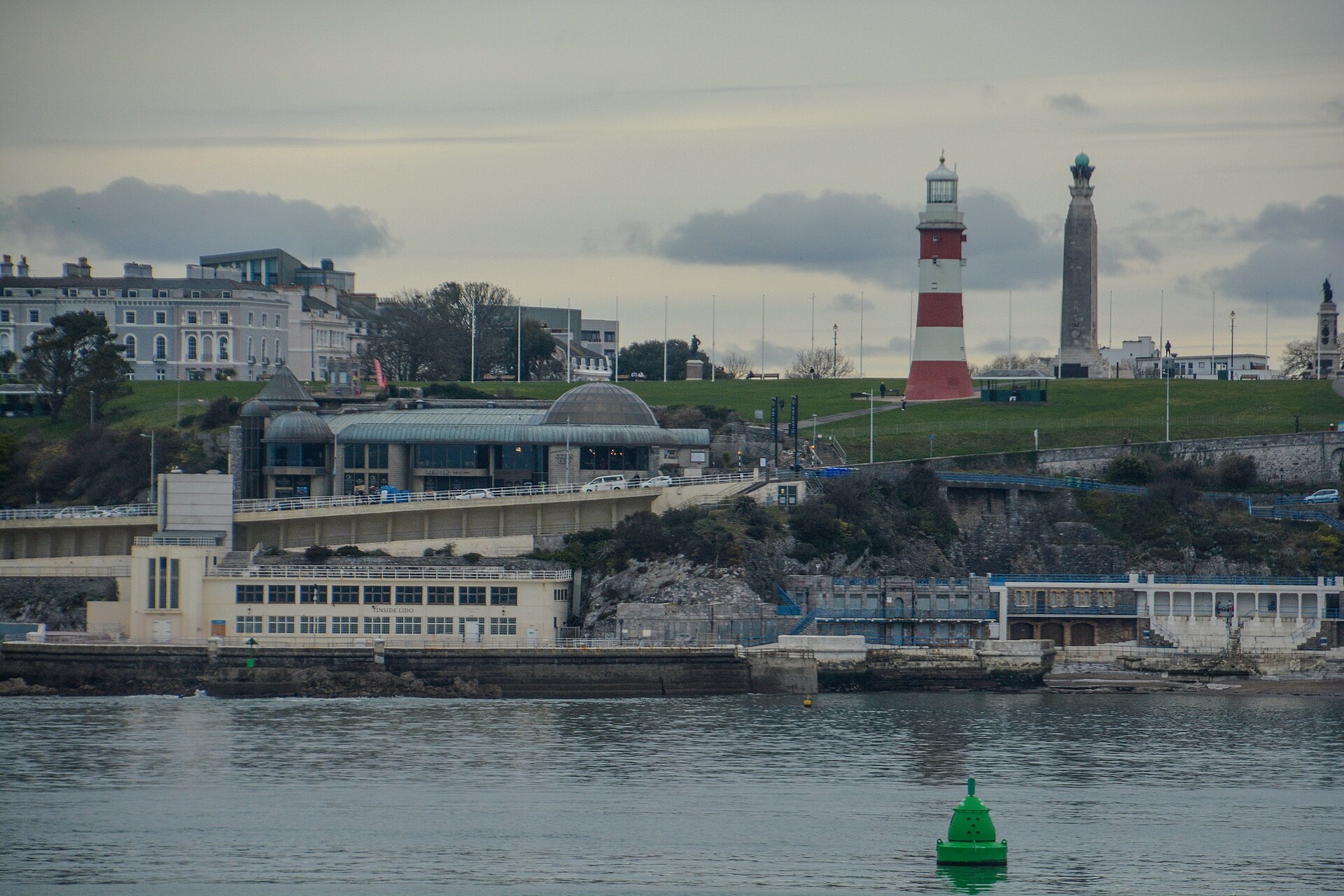

Plymouth’s maritime history gives children some wonderfully concrete puzzles. How does a lighthouse acquire a new home? How can someone discover damage hidden inside a wooden carving? Smeaton’s Tower, rebuilt on Plymouth Hoe in 1882, and the naval figureheads conserved for The Box offer two different starting points, with drawing and discussion prompts you can use at home.[1][2]
Smeaton’s Tower: A Lighthouse With Two Locations
John Smeaton was the civil engineer who designed the third Eddystone Lighthouse. Plymouth City Council’s account identifies that lighthouse with the landmark now known as Smeaton’s Tower, rebuilt on Plymouth Hoe in 1882. Start with those two place names: Eddystone and the Hoe. They let children follow the building’s changing location without needing to memorise a long history of lighthouses.[1]
The word “rebuilt” deserves a pause. Ask your child how they would approach reconstructing a building somewhere else. What would they record before starting? Which parts would need labels? How would they check that the finished building matched their plan? These are suggested engineering questions, giving children a way to think through the work that reconstruction involves.[1]
Try a small version with building blocks. Let one person construct a tower, then ask another to reproduce it elsewhere using a drawing or written instructions. Afterwards, compare what each person needed to know. A younger child might concentrate on shape and colour, while an older child could devise a numbering system for the pieces.[1]
For a simple historical drawing, label one sketch “Eddystone” and another “Plymouth Hoe, rebuilt 1882”. A separate caption can identify Smeaton as the designer. Keeping the designer, original location and rebuilding milestone distinct helps children explain the story in their own words.[1]
Meet Three Named Naval Figureheads
A figurehead is a carving made to decorate the bow, or front, of a ship. Visit Plymouth, the city’s official destination website, described a conservation project for naval figureheads destined for The Box, Plymouth’s museum, gallery and archive. Its October 2019 announcement names individual carvings, making it possible to discuss particular objects rather than an anonymous group of wooden figures.[1][2]
- HMS Royal William: also called “King Billy”, this figurehead represents William IV. The announcement describes it as 13 feet tall and weighing two tonnes. Ask how that scale might affect supporting or moving it.
- HMS Sybille: the announcement describes an ancient Greek-inspired figurehead. Ask what a character’s appearance might suggest, then separate that interpretation from facts established by a label.
- HMS Centaur: the announcement records the ship’s service during the Crimean War in 1855. Use this as a reminder that a decorative carving can also lead to questions about the warship that carried it.
With older children, keep appearance and military history in the same conversation. Admiring a carver’s skill leaves room to ask what a naval ship did and whose experiences its decoration leaves out. Let children identify questions they would want answered before writing a fuller account of a ship.[2]
Finding Damage Beneath the Paint
The conservation problem went deeper than the visible surface. According to the 2019 announcement, specialists used sonic tomography scanning, a method developed to measure decay cavities inside living trees, to assess deterioration within the figureheads. They also analysed layers of surface paint. Together, those investigations helped them choose treatment methods.[2]
That sequence makes a useful drawing activity. Sketch an imaginary wooden figure with an outside view and an imagined inside view, then give the conservator questions to investigate. Where might damage be hidden? What could older paint layers reveal? The recorded work secured the figureheads’ structural integrity and included repairs before repainting, so there’s more to discuss than choosing a fresh colour.[2]
A Question to Carry Back to Plymouth Sound
Plymouth Sound National Marine Park’s heritage account describes the Sound as a deep natural harbour used by ships for centuries. Against that wider setting, the tower and figureheads offer two manageable objects of study: a building reconstructed in another place and carvings investigated so they could be conserved. Children can begin with one object and gradually ask about the people and work connected to it.[1][2][3]
Finish by asking your child to choose something from their own drawing that they would preserve unchanged, and something they would repair. Then ask the harder question raised by the figureheads’ treatment: how much should you replace when you’re trying to keep an old object?[2]
Sources and checks
These sources were used for this article. Availability, prices and service details can change after the stated check date.
- Smeaton’s legacy inspiring civil engineers of the future | PLYMOUTH.GOV.UK
Checked 20 October 2026.
John Smeaton was a civil engineer who designed the third Eddystone Lighthouse. Smeaton’s Tower was rebuilt on Plymouth Hoe in 1882. The Box is Plymouth’s museum, gallery and archive. The reconstruction milestone provides the factual basis for the article’s suggested drawing and building activities.
- Take a bow - fabulous naval figureheads set to return to The Box - Visit Plymouth
Checked 20 October 2026.
The figureheads decorated the bows of naval warships and underwent conservation for The Box. HMS Royal William, also called King Billy, depicts William IV and was described as 13 feet tall and weighing two tonnes. The HMS Sybille figurehead was described as ancient Greek-inspired. The announcement records HMS Centaur’s service during the Crimean War in 1855. Conservators used sonic tomography to assess internal deterioration and analysed surface paint layers to inform treatment. Structural work and repairs preceded repainting. The conservation account supports the article’s suggested questions about hidden damage, repair and preservation.
- Heritage - Plymouth Sound National Marine Park
Checked 20 October 2026.
Plymouth Sound is a deep natural harbour used by ships for centuries. The Sound provides the wider maritime setting for the two object histories.